“It’s Not a SEND Crisis – It’s an Everything Crisis”
At this point, I think we can all agree that “crisis” has lost its meaning in education.
We’ve had funding crises, recruitment crises, behaviour crises, and now, the big one — the SEND crisis.
Except it’s not really a SEND crisis, is it?
It’s an everything crisis.
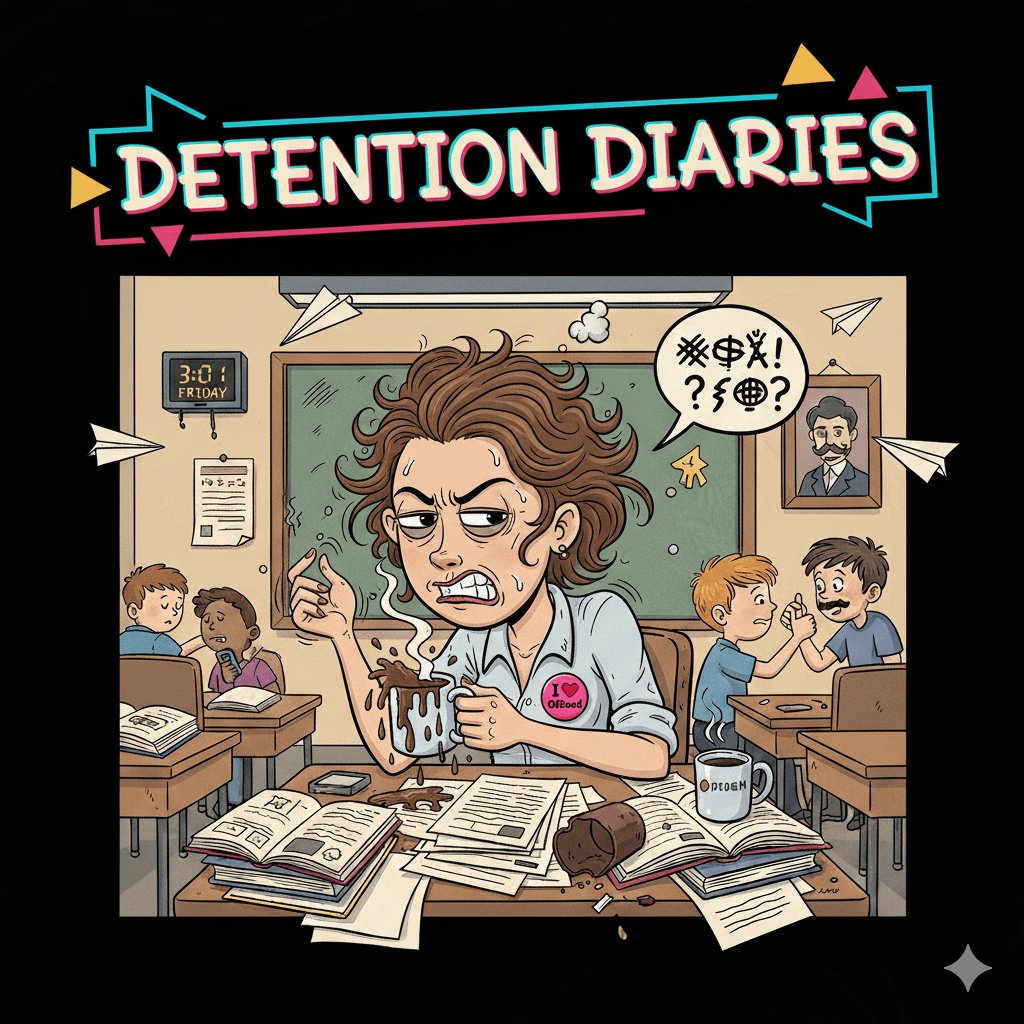
It’s what happens when years of underfunding, over-promising, and “doing more with less” finally meet in one overcrowded classroom, where you’re trying to deliver “quality first teaching” to thirty-two students with five different seating plans and a dodgy projector.
The SEND Situation: Quality First, But First We Need Quality Conditions
We’re expected to deliver adaptive teaching for every learner — to tailor, tweak, and transform lessons so that every child can access the curriculum.
That’s fine. That’s good teaching. But let’s be honest — it’s getting harder to do it properly.
We talk a lot about “quality first teaching,” but right now most of us are firefighting.
We’ve got larger class sizes than ever, dwindling support, and the growing need to cut costs on cover — which means more non-specialists parachuted into classrooms and less consistency for students who desperately need it.
Teachers want to help every child succeed. We genuinely do. But the system is working against us. We’re told that if we just try harder, or use the right buzzword in a lesson plan, everything will be fine.
Spoiler: it isn’t fine.
We’re doing our best, but the truth is, the foundations are cracked, and the cracks are widening.
Ofsted’s New Framework: A Riddle Wrapped in Acronyms
And then there’s Ofsted.
Because when you’re already juggling chainsaws blindfolded, what you really need is a new framework.
This one, apparently, focuses on “curriculum quality,” “behaviour and attitudes,” and “personal development.”
It sounds noble. It always does. Until you read the fine print and realise that it’s basically the same expectations, repackaged with a different set of PowerPoint slides.
We’re told accountability is good — and yes, it is. But this version of accountability feels like being told to fit a one-size-fits-all hat that’s clearly three sizes too small.
Schools are unique. Communities are different.
Yet, we’re all being measured by the same ruler, regardless of context.
And the new buzzword is “coherence.” Everything must be “coherent.”
Because nothing says “improving teacher wellbeing” like staying up until 10pm trying to make your curriculum map look coherent enough to avoid a week of heart palpitations when the phone rings with “the call.”
Teacher Retention: We Don’t Want Champagne, We Want Time
And then there’s the retention crisis.
Apparently, teachers are leaving in droves because they’re underpaid.
Sure — that’s part of it. But it’s not the full story.
You can throw all the recruitment bonuses in the world at the problem, but it won’t fix what’s really wrong.
Teachers don’t want champagne and bonuses.
We want time.
We want to do our jobs properly without drowning in admin.
We want to feel trusted to teach instead of being inspected into the ground.
It’s not about the pay rise (though, let’s not kid ourselves — it wouldn’t hurt).
It’s about being treated as professionals instead of performance data.
Where That Leaves Us
So here we are.
In classrooms that are fuller, budgets that are tighter, and expectations that are somehow higher.
We’re tired, but we still care — and that’s the part that hurts the most.
Teachers aren’t leaving because they’ve stopped loving teaching.
They’re leaving because it’s becoming impossible to do it well in the system we’ve been handed.
Maybe one day, we’ll get a version of education that works for everyone — staff, students, and the system itself.
Until then, we’ll keep doing what teachers always do:
Making something out of nothing, laughing at the chaos, and surviving on caffeine, camaraderie, and the faint hope that someone, somewhere, might finally start listening.
Feel free to comment and let us know how you’re getting on at school – is there a crisis?

Leave a comment