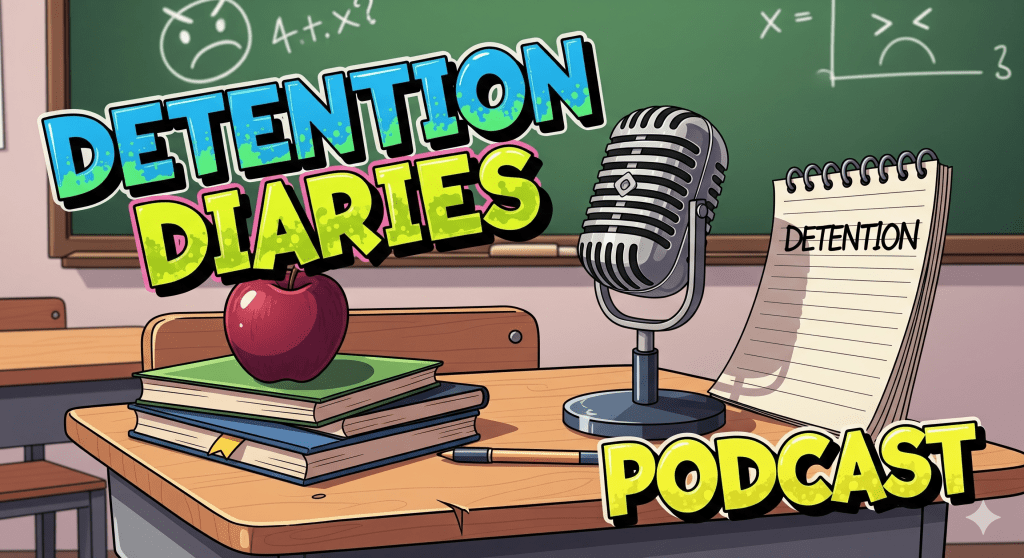
Welcome to the Detention Diaries Podcast — the staffroom chat you didn’t know you needed. Each episode dives into the highs, lows, and downright hilarious moments of life in education. Whether you’re a teacher, parent, carer, or just someone curious about what really goes on behind the classroom door, you’ll find stories to make you laugh, think, and maybe even shout “same!”

Make it Make SENDs #5 : Music and Inclusivity – is it even possible? with Kate Campbell-Green – Detention Diaries
Music, Inclusion, and Empowerment with Kate Campbell GreenJoin us in this insightful episode as Kate Campbell Green shares her journey through music education, inclusion, and advocacy. We explore how music can be a powerful tool for social change, personal growth, and transforming educational spaces. Discover practical strategies to make music truly inclusive and inspiring at all levels.Timestamps:00:00 – Welcome and introduction to Kate Campbell Green's journey 02:23 – Setting the tone: Covid, new year, and purpose of the Make It Make Sense podcast 03:03 – Why understanding my autistic daughter enhances my work in education 04:00 – The broad role of music services in schools and misconceptions 05:38 – How music education addresses disengagement and fosters belonging 06:36 – The significance of authentic venues like Stoller Hall and Band on the Wall 09:02 – Early musical influences and pathways from DJing to education 10:33 – Growing up autistic and ADHD: challenges and the role of music as sanctuary 13:13 – The power of creative process and improvisation in music learning 16:04 – Deep dive into inclusive music education: frameworks and mental models 18:19 – The four Rs of inclusion: rapport, resilience, representation, reflection 22:21 – The culture of music departments as safe spaces 23:02 – Is education truly inclusive? Challenges and personal reflections 25:26 – Insights from Dr. Shelley Moore on inclusive practices worldwide 28:41 – The pitfalls of segregation versus genuine inclusion 31:23 – The physiological and neurological impact of music on neurodiverse learners 33:45 – How improvisation and creative frameworks foster belonging 36:43 – Building trust and relationships in disengaged learners 38:07 – The emotional weight and reward of nurturing young people through music 43:21 – The impact of engagement in real-world performance venues 48:39 – How Tameside Music Service creates opportunities for all young people 55:18 – The significance of spaces like Stoller Hall for young performers 62:37 – The role of PGCEI and professional development in advancing inclusive practice 66:35 – Practical tips for teachers: mindset, respect, and embracing complexity 68:37 – The leaky pipeline: strategies to support long-term musical journeys 75:44 – Envisioning the future: joined-up pathways and careers in music 76:54 – The need for holistic, continuous music learning from cradle to career 79:55 – Why creativity and improvisation are skills machines can't replicate 80:48 – Reflection: the people behind music education give us hope 81:16 – If policy makers listened: Just give us the money & trust educators 82:23 – Balancing life and work: personal anecdotes from Kate 86:31 – What's next: new projects, stewardship, and supporting local music ecosystemsSupport the showEnjoyed the episode? Then it’s time to join the class.👉 Head to http://www.detentiondiaries.comto read the blog, sign up for the newsletter, and join our online staffroom community.Because education doesn’t end at the classroom door — and neither does the conversation.Support the showEnjoyed the episode? Then it’s time to join the class. 👉 Head to http://www.detentiondiaries.com to read the blog, sign up for the newsletter, and join our online staffroom community. Because education doesn’t end at the classroom door — and neither does the conversation.
- Make it Make SENDs #5 : Music and Inclusivity – is it even possible? with Kate Campbell-Green
- Detention Diaries #5 – Redefining Masculinity: What does it really mean to be a man?
- Detention Diaries #4 What Teachers Really Need: Ross McGill on Workload, Wellbeing & the Future of Schools
- Make it Make SENDS #4 – Aiming for the Edges with Dr Shelley Moore. How inclusion REALLY works!
- Make it Make SENDs #3 – Talking About Talking: Jane Harris on Fixing the Speech and Language Crisis
💡 Want to be on the show? Share your story! Fill out the form below and tell us a little about yourself — we love hearing from educators of all kinds.


